
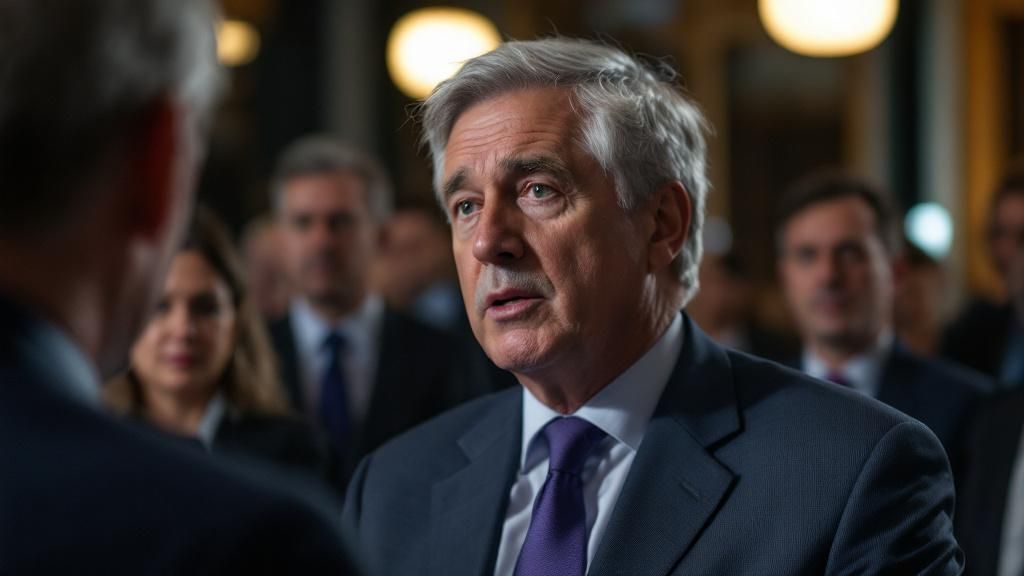
As households across the nation struggle with rising energy bills and price increases hitting unprecedented levels, the opposition leader has initiated a scathing attack on the Government’s management to the cost-of-living emergency. In a tense parliamentary exchange, the opposition has challenged the administration’s limited support measures, calling for greater support to help hard-pressed families. This article analyses the mounting tensions surrounding the crisis and investigates the competing visions for economic assistance.
The Opposition’s Criticism of Government Policies
The leader of the opposition has intensified scrutiny of the government’s handling of the mounting cost-of-living emergency, contending that current measures fall woefully short of addressing the scale of hardship impacting British families. In parliamentary debate, the opposition has presented a comprehensive critique spanning insufficient financial assistance, limited involvement in the energy sector, and a perceived lack of speed in addressing inflation. The opposition contends that whilst households grapple with record-high bills, the government’s piecemeal approach only addresses surface issues rather than dealing with fundamental causes of economic hardship.
Central to the opposition’s argument is the claim that the government has fundamentally misjudged both the scale and length of the crisis. Opposition representatives have highlighted figures indicating that millions of people now face genuine hardship, with many forced to choose between keeping warm and feeding themselves. The opposition maintains that the government’s initial response failed to assess the crisis’s impact, resulting in relief measures that were found wanting when the situation got worse further. This miscalculation, they argue, reflects wider shortcomings in economic forecasting and policy planning.
Limited Support Systems
The opposition has directly criticised state assistance programmes as inadequate and misdirected, arguing that fuel cost controls do not adequately safeguard vulnerable populations effectively. Commentators highlight that whilst the government has implemented multiple support measures, encompassing grants and council tax rebates, these measures deliver limited reprieve without resolving structural challenges. The opposition argues that means-tested benefits remain too restrictive, shutting out millions of working families who nonetheless struggle with mounting expenses. In addition, they argue the government’s approach lacks the determination required to tackle such an unprecedented economic challenge.
Opposition assessment proposes that present welfare systems negatively impact those earning mid-range salaries who miss out on access requirements for targeted assistance. The party has proposed alternative frameworks involving across-the-board allowances, expanded welfare provisions, and public sector action in energy markets to stabilise prices. They emphasise that short-term solutions, though beneficial, cannot substitute for deep-rooted transformation. The opposition maintains that in the absence of significant law changes and greater state spending, families will keep facing severe money pressures throughout the foreseeable future.
Long-range Financial Strategy Concerns
Beyond pressing crisis intervention, the opposition has posed key questions regarding the government’s long-term economic approach and competitive standing. Opposition analysts argue that the existing strategy focuses on short-term political considerations over sustainable economic planning, risking damage to Britain’s future economic wellbeing. They contend that without deliberate investment in renewable energy infrastructure, industrial capacity, and human capital development, the nation risks prolonged economic stagnation. The opposition stresses that tackling cost of living challenges requires extensive reforms tackling productive efficiency, innovation, and industry development alongside urgent relief measures.
The opposition has expressed concerns that government policy lacks coherence across different sectors, with energy policy, industrial strategy, and fiscal measures functioning separately rather than as unified parts. Critics argue this disjointed strategy hinders resolution of persistent inflation and structural economic weaknesses. The opposition pushes for a integrated strategic framework encompassing energy transition, manufacturing revival, and skills development. They maintain that real problem-solving demands transformative policy reform rather than incremental adjustments to existing frameworks.
Government’s Response and Counter-arguments
The government has robustly defended its economic strategy, arguing that the cost of living pressures are chiefly driven by global factors beyond Westminster’s direct control. Ministers have highlighted the extraordinary scale of the energy crisis, stemming from international tensions and global supply chain breakdowns. They contend that their tailored support schemes, covering the energy price ceiling and affordability support payments, constitute a prudent and financially sound approach. The Treasury maintains that profligate expenditure could exacerbate inflation further, damaging long-term financial stability and eventually harming the very households the opposition claims to champion.
Government officials have stressed the significant monetary support currently in place, amounting to billions of pounds in immediate aid to vulnerable households. They contend that their policies balance immediate relief with prudent fiscal management, preventing the cycle of indebtedness that unchecked spending could trigger. Ministers also point to their work in boosting energy security through renewable investments and supply diversification. The government contends that whilst the opposition provides sympathetic rhetoric, their suggested policies lack financial viability and would prove unsustainable without triggering higher taxes or additional debt.
Furthermore, government officials highlight their commitment to addressing underlying economic challenges through productivity improvements and enterprise investment schemes. They maintain that enduring recuperation requires fundamental economic restructuring rather than short-term payments. The administration considers this approach in the end produces increased wealth and security for the entire population.
